


Extruding Prodene TPE
Our profiles are extruded in thermoplastic elastomers (TPE, TPV, TPS) such as SEBS, PP-EPDM (Santoprene) or PVC, from 20 Sh A to 45 Sh D. They can be used from -40 °C to +100 °C and are resistant to UV, ozone, acids, bases and detergents.
Extrusion continuously produces long lengths with a constant cross-section. All our profiles are fully recyclable, except profiles with adhesive tape: in that case, the adhesive tape must be removed before recycling.
Recycled material, ground in-house
Our profiles can incorporate recycled material, taken from our own production offcuts and ground in our workshop. Unlike vulcanised rubber, a thermoplastic elastomer can be remelted and extruded again.
Line start-up scrap, purges and end-of-run material are sorted by material and colour, then ground on site. This regrind goes straight back into the extruder hopper, blended with virgin material for production runs that allow it.
- A short loop: the material never leaves the plant, with no transport and no intermediary.
- A known material: we recycle our own Prodene formulations, whose origin and composition we control.
- A known material: we recycle our own Prodene formulations, whose origin and composition we control.
- Less waste: every kilo of offcut reused is one kilo less of virgin material.
Would you like a profile with a proportion of recycled material? Just say so in your quote request.
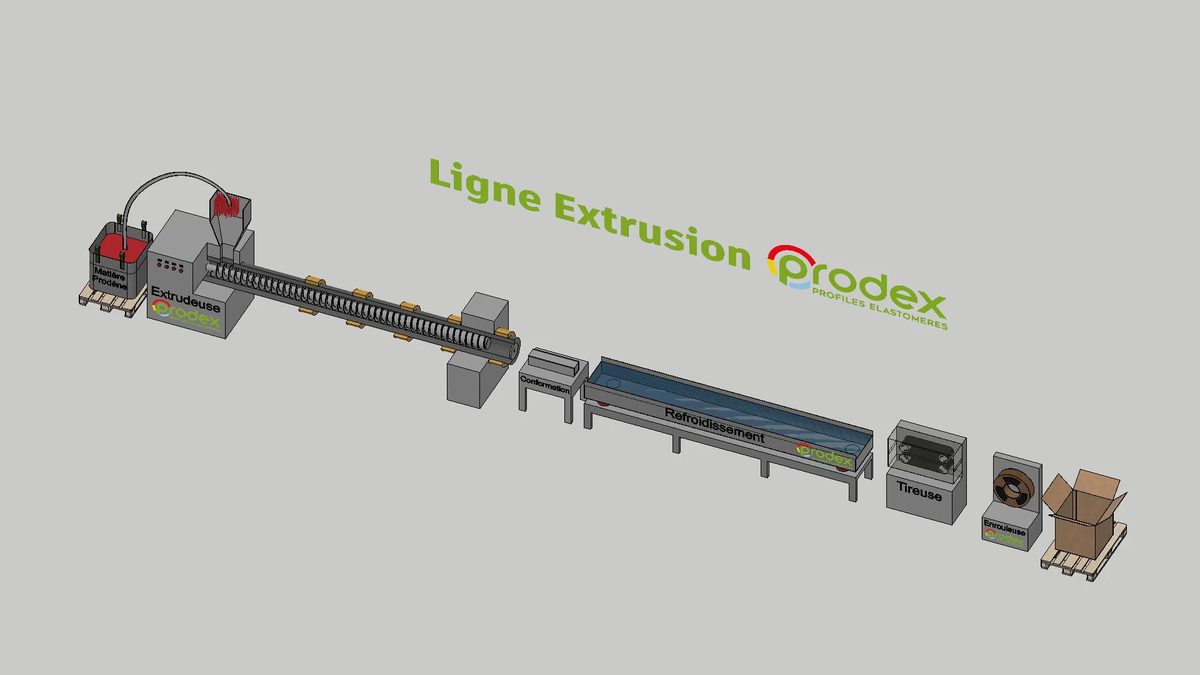
The extrusion line, step by step
A Prodex extrusion line runs through seven continuous steps:
- feeding
- heating
- shaping
- calibration
- cooling
- hauling off
- winding and packaging.
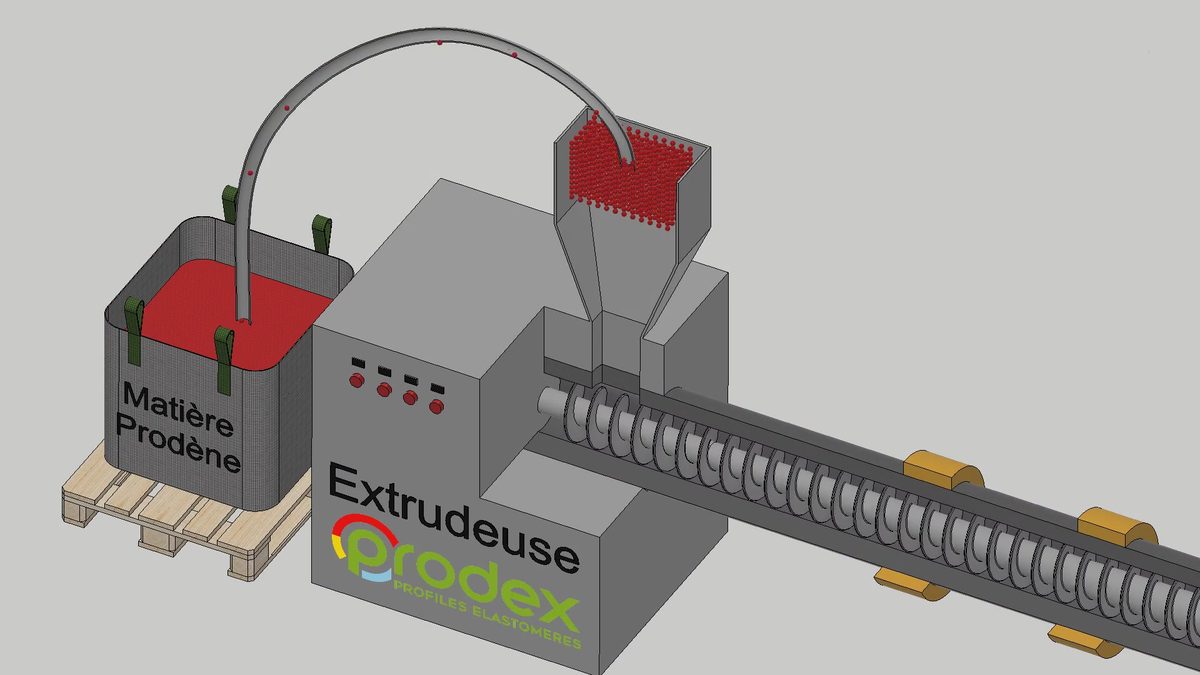
1. Material feeding
The Prodene raw material arrives as pellets. A vacuum conveying system automatically transfers them to the hopper that feeds the extruder, with no manual handling and no interruption to the flow.
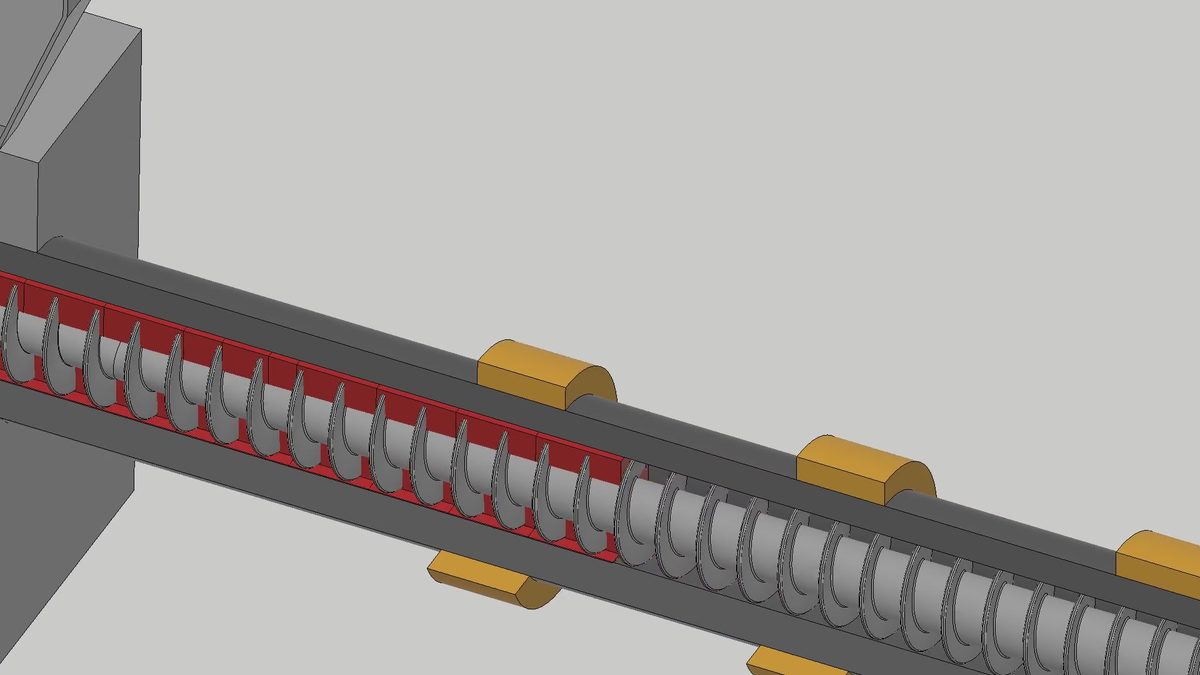
2. Heating in the extruder
Inside the extruder, a screw rotates within a barrel surrounded by heater bands. The pellets are conveyed forward, compressed and heated: they gradually melt to form a homogeneous, viscous material.
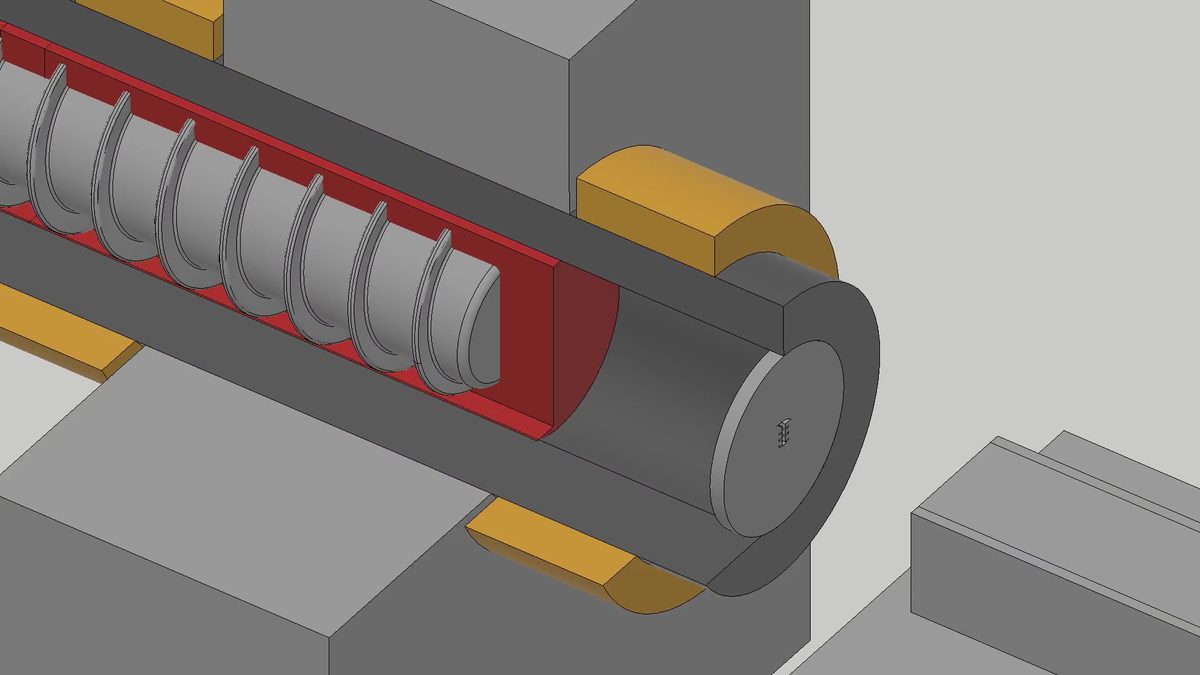
3. Shaping in the extrusion die
At the end of the barrel, the molten material is forced through the extrusion die, a tool machined to the exact shape of the seal or profile cross-section. The extrusion die defines the part’s geometry: each profile has its own dedicated extrusion die.
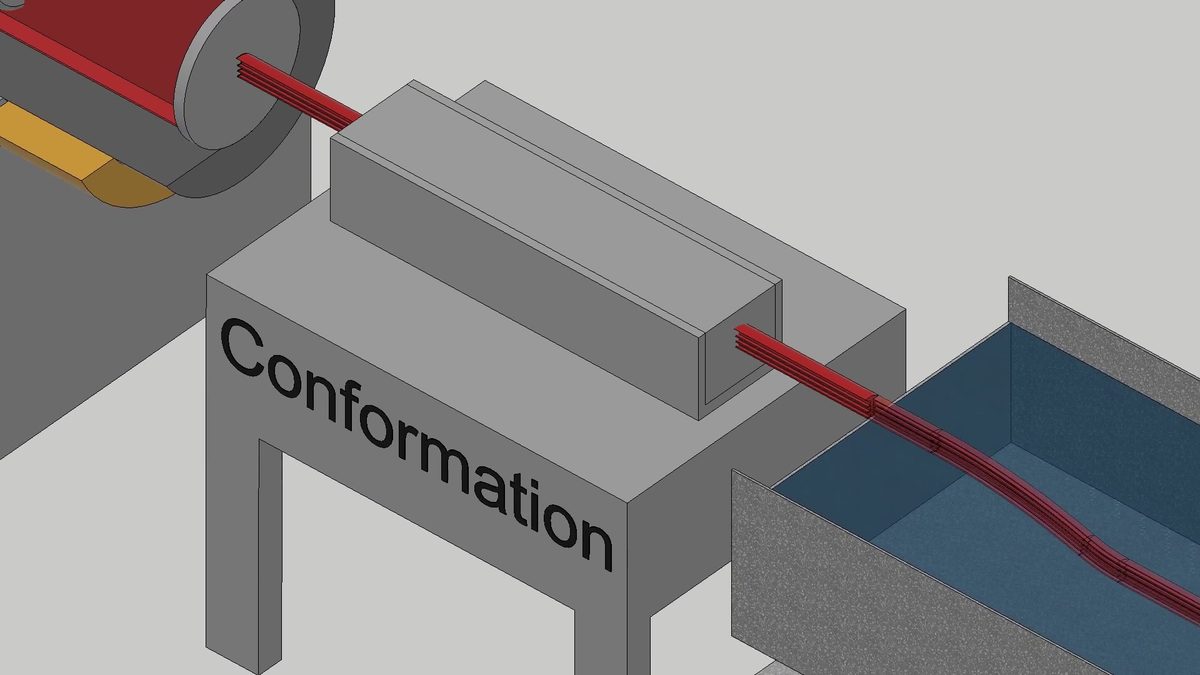
4. Calibration
On leaving the extrusion die, the still-hot profile passes through the calibrator. This station stabilises its shape and dimensions as it begins to set, ensuring that the dimensions are met.
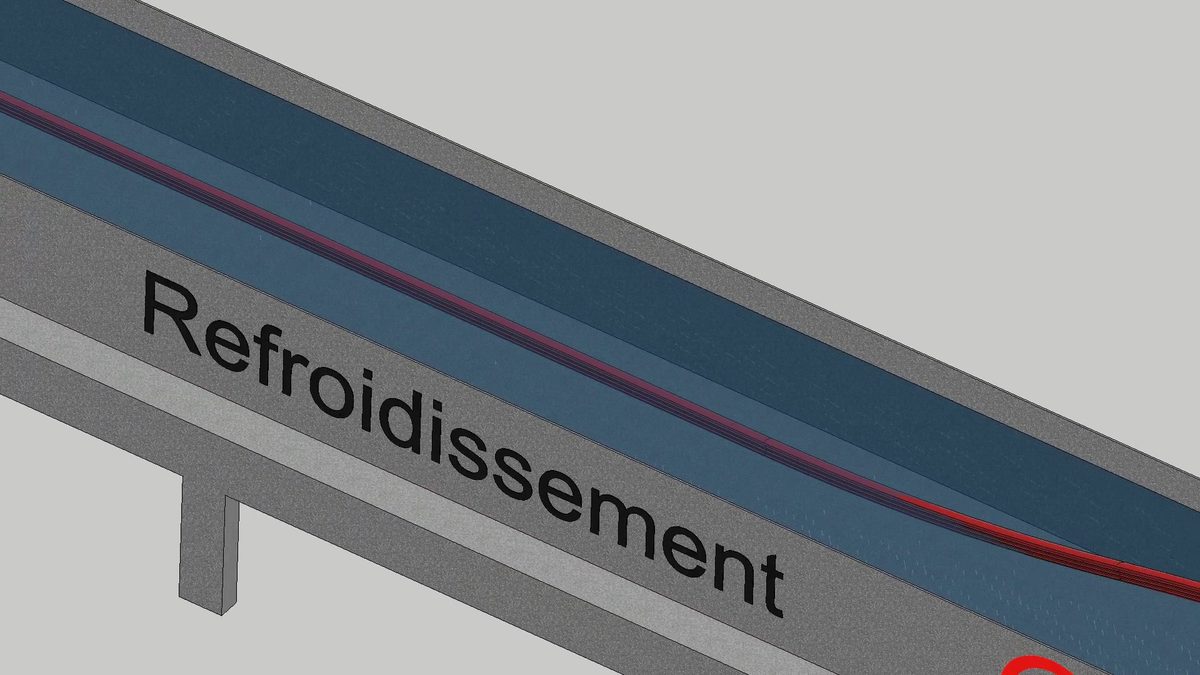
5. Cooling
The profile then passes through a long water bath. Cooling sets the material permanently: the TPE regains its elasticity and the profile takes on its final shape.
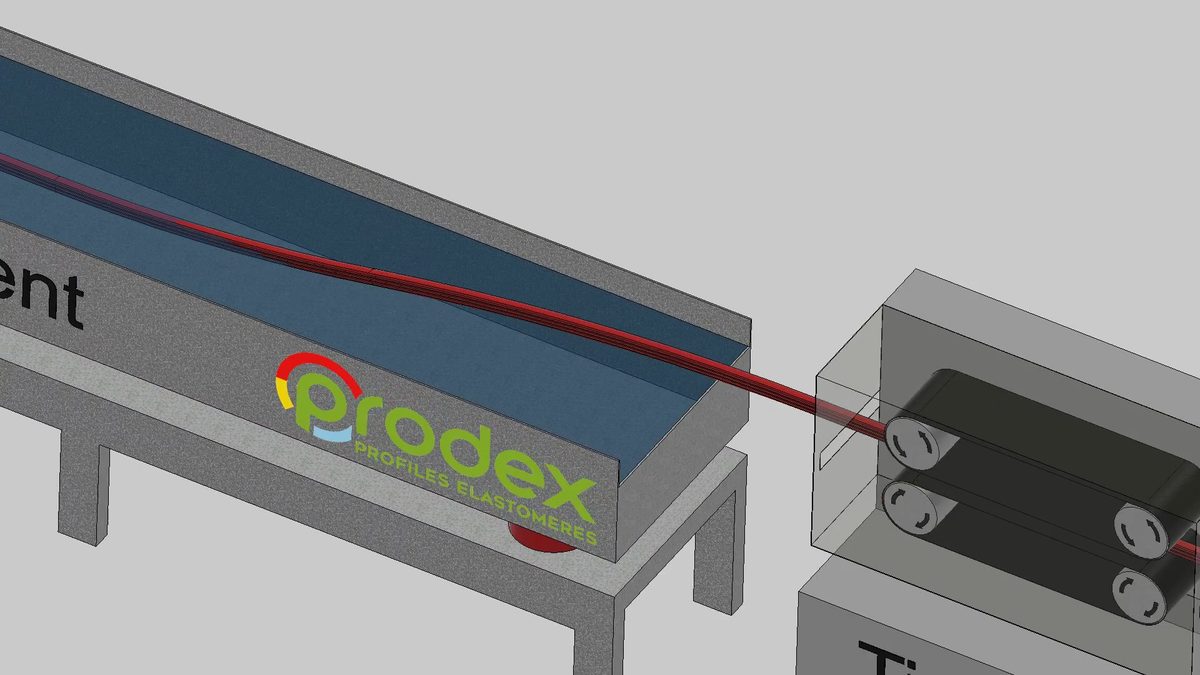
6. Hauling off
The haul-off unit, fitted with two caterpillar tracks, draws the profile at a steady speed along the entire line. This speed, synchronised with that of the extruder, determines the consistency of the cross-section.
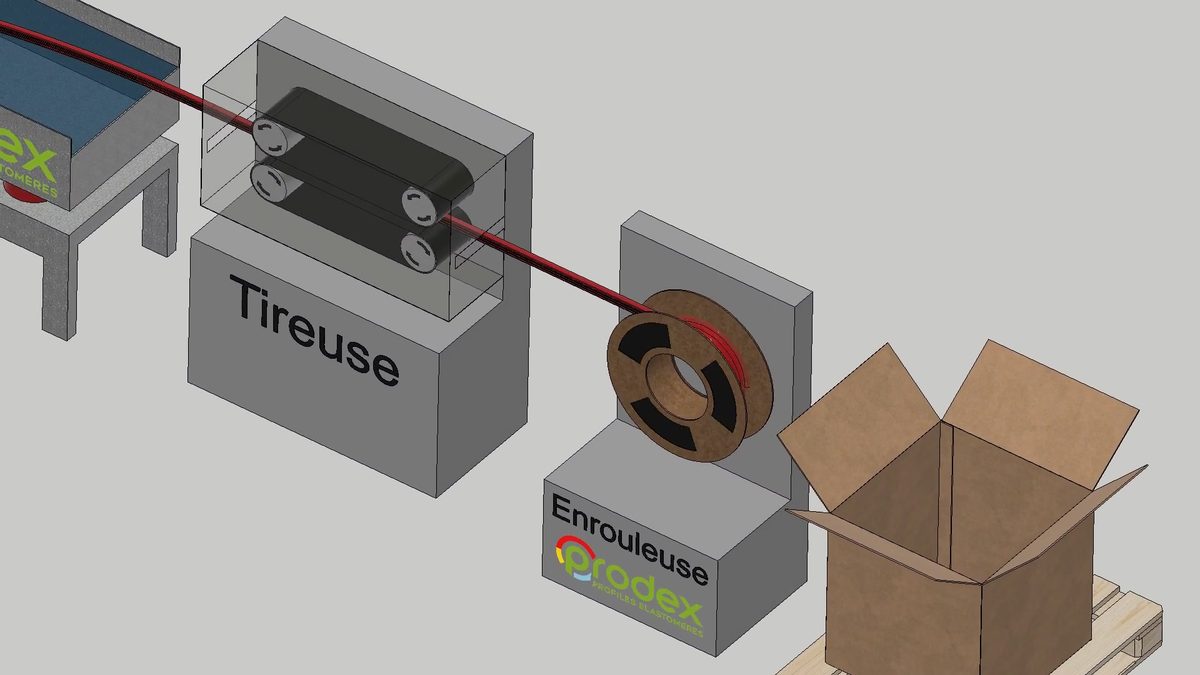
7. Winding and packaging
At the end of the line, the winder forms reels of profile. Once complete, each reel is labelled and boxed on a pallet, ready for shipment.
Co-extrusion: several materials, one single profile
A profile can combine 2 to 4 materials, 2 or 3 colours, different hardnesses or a combination of solid and foam. Each part of the seal thus has the hardness, colour or function it needs.
The principle
A co-extrusion line follows the same steps as conventional extrusion, with one difference at the head of the line: instead of a single extruder, two (or more) extruders work in parallel. Each melts its own material, then the flows merge in a shared co-extrusion die.
A few examples
- Soft + rigid: a soft sealing lip on a rigid base that provides fastening.
- Solid + foam: a solid part for structural hold, a foam part for compression.
- Two-colour: a two-colour seal to identify the fitting side.
Co-extruded prototypes are delivered in 15 to 20 days, thanks to extrusion dies manufactured in-house and our fleet of extruders. The materials are fused during manufacturing: no bonding or assembly required on your side.
Solid or foam
Several foam grades (black, white or coloured) are available as standard, in different densities. Foam provides flexibility and compression; solid material provides mechanical strength and dimensional accuracy.
Foam profiles have wider dimensional tolerances (E3-L3 according to the standard).
Colours on demand
More than 60 standard colours are available, or the colour of your choice matched to the closest RAL or PANTONE. Finishes can be matt, translucent, metallic, fluorescent or phosphorescent. Different materials combined in the same colour may have a different appearance depending on their finish, lighting, etc. That is why we always refer to “closest RAL” colours. An in-situ test can validate the final appearance.
Conformité réglementaire
Toutes les matières All Prodene materials comply with REACH and RoHS regulations. Depending on your application, they can meet the following standards:
| Field | Standard |
| Food contact | EC, FDA |
| Building | CSTB, RAL-GZ |
| Fire and smoke | EN 13501 (building), EN 45545 (railway), UL94 V0 (electrical equipment) |
| European Directives | 2011/65/EU (RoHS2), 2000/53/EC (end-of-life vehicles) |
Quality control
Prodex has been ISO 9001 certified since 2004. This commitment involves every team and underpins a policy of rigour, efficiency and continuous improvement in the service of our customers. The current certificate can be viewed on the Quality Commitment page.
On the product side, our profiles are manufactured to published manufacturing tolerances. In-line inkjet marking can carry your name, your part number or a batch number to ensure traceability.
Our operators carry out dimensional controls at start-up and during production, hardness and appearance controls, and laboratory tests, with records kept for each batch.
Prodex has a range of control equipment, including an optical profile projector, a digital profile projector, laser temperature measurement, pressure measurement, callipers, etc.